Tag: devops roadmap

  • Kickstarting Your DevOps Career: Roadmap & Real Responsibilities

    As a DevOps Engineer Roles and Responsibilities, my mission is to improve how software moves from development to production, faster, safer, automated.

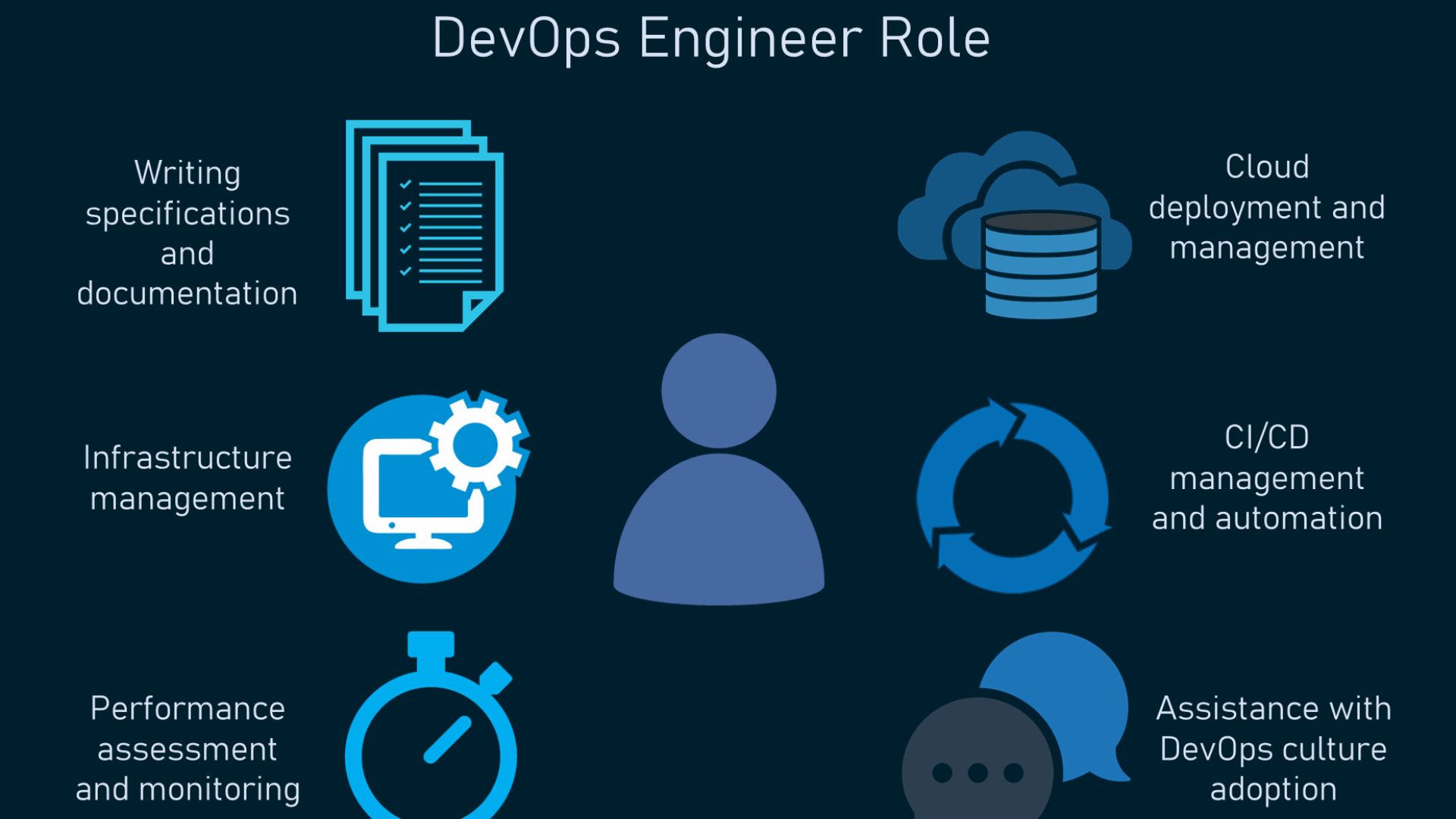
    Devops Engineer Roles and Responsibilities:

    • Automate builds, testing, deployments (CI/CD)
    • Manage infrastructure (cloud: AWS/Azure/GCP)
    • Implement monitoring, logging & alerting
    • Improve system reliability, security, scalability
    • Support developers and operations with tools & processes

    I ensure smooth delivery of features without breaking things.

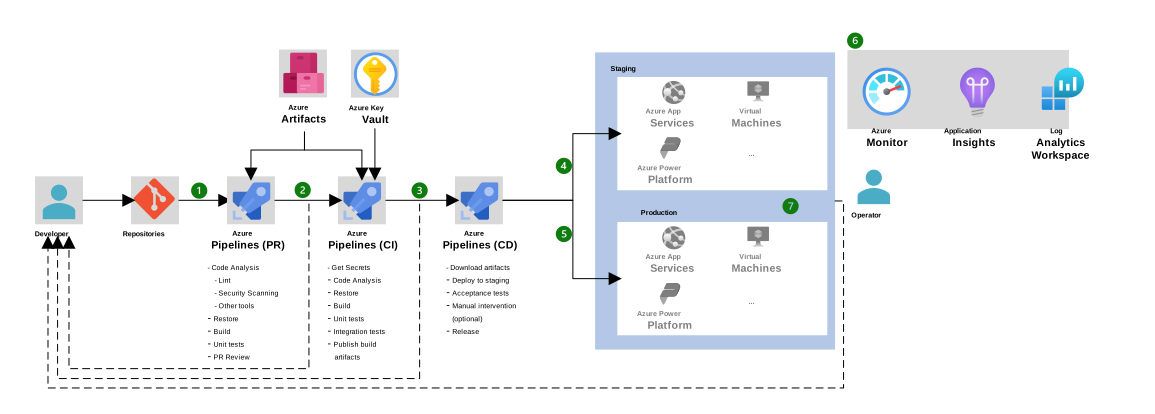
    https://learn.microsoft.com/en-us/azure/devops/pipelines/architectures/media/azure-devops-ci-cd-architecture.svg?view=azure-devops

    My Career Journey in Tech

    • Started by learning Linux & networking basics
    • Git + automation scripts (Bash/Python)
    • Learned CI/CD tools (Jenkins/GitHub Actions)
    • Adopted Containers & Kubernetes
    • Worked hands-on with real cloud infrastructure
    • Continuous learning is important. Focusing on Observability, Security, SRE mindset.

    Skills, Certifications & Experiences That Helped Me Grow

    Core Skill Categories:

    Skill AreaTools / Concepts
    OS & NetworkingLinux, SSH, DNS, Firewalls
    Version ControlGit, branching strategies
    Build & CI/CDJenkins, GitHub Actions, GitLab
    CloudAWS / Azure / GCP/ Oracle
    ContainersDocker, Kubernetes
    Infra as CodeTerraform, CloudFormation
    MonitoringPrometheus, Grafana
    SecurityDevSecOps, Secrets Mgmt

    Helpful Certifications:

    • AWS Cloud Practitioner / Solutions Architect
    • CKA / Kubernetes Admin
    • Docker or Linux certifications
    • DevOps Foundation (optional but a good start)

    Hands-on Experience:

    • Deploy apps continuously, break things, fix things
    • Work with real cloud projects (personal or internship)
    • Debug failures — logs, metrics, alerts

    Skills grow fastest through projects + failures + reflection.


    How Each Team Contributes to the Software Lifecycle

    TeamResponsibilityDevOps Contribution
    DevelopmentWrite code & featuresEnsure smooth integration & automated testing
    QA / TestingValidate functionalityEnable automation, shift-left testing
    SecurityProtect system & dataBuild DevSecOps pipelines (integrated scanning)
    Operations (SRE/Infra)Run in productionAutomated deploys, monitoring, reliability

    We remove friction between teams and create One Team delivering value continuously.


    Collaboration & Handoff Points

    Where DevOps coordinates most:

    • Feature planning → Infra readiness
    • Code merge → Automated build & test pipelines
    • Deployment → Blue-green & rollbacks
    • Incident management → RCA & improvement

    Final Messages

    DevOps is not just tools.
    DevOps is understanding problems, automating solutions, and working as one team.

    If you focus on:
    Learning fundamentals
    Building automation
    Being curious
    Continuous improvement

    …you will grow very fast in this field

    Next Steps :

  • Fundamental Concepts & First Principles of DevOps

    DevOps is not just a toolset — it’s a mindset and a business advantage.Its purpose is simple. we will see the Fundamental Concepts & First Principles of DevOps.

    To understand deeply, we must start from its first principles — also known as The Three Ways.


    The Three Ways of DevOps (Core First Principles)

    1. Flow — The First Way

    Increase the speed of work moving from Development → Operations → Customers.

    How?

    • Systems Thinking: Analyze the entire value stream end-to-end
    • CI/CD: Automate build → test → release
    • Reduce handoffs, remove bottlenecks

    Goal → Deliver updates faster and with higher quality


    2. Feedback — The Second Way

    Create fast and continuous feedback loops.

    How?

    • Real-time monitoring + logging
    • Shift-Left: testing and security earlier in lifecycle
    • Quick detection → quick correction

    Goal → Fix issues before customers notice


    3. Continuous Learning & Experimentation — The Third Way

    Build a blameless, innovative culture.

    How?

    • Learn from failures, not punish them
    • Encourage experiments, small frequent changes
    • Apply Lean principle → Kaizen (continuous improvement)

    Goal → Organization keeps improving forever


    Culture + Process + Technology

    ValueMeaning
    Shared ResponsibilityDev & Ops accountable together
    Collaboration & EmpathyRemove silos
    Psychological SafetyFailures = learning
    Product ThinkingFocus on customer value

    Technical Foundations You Must Master

    ConceptWhy It Matters
    AutomationRemove slow manual tasks
    Infrastructure as CodeReproducible, versioned environments
    Version ControlTrack every change (Git is essential)
    ObservabilityKnow what’s happening in production
    Security IntegrationDevSecOps ensures safety by design

    DevOps Core Knowledge Areas (Skill Map)

    PhaseWhat to LearnKey Tools
    FoundationsLinux, Git, Networking, ScriptingBash, Python
    Automation & CI/CDBuild & test automationGitHub Actions, Jenkins, GitLab CI
    Infrastructure & OrchestrationContainers, IaC, cloud infraDocker, Kubernetes, Terraform, Ansible
    Cloud & ObservabilityMonitoring, logs, tracingAWS/GCP/Azure, Prometheus, Grafana, ELK

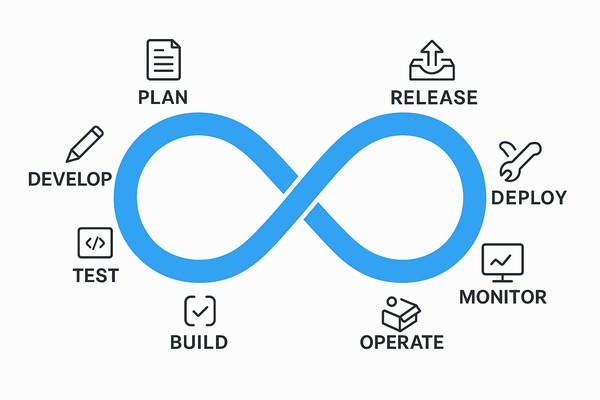
    DevOps Lifecycle Summary (Infinite Loop)

    This loop emphasizes:
    Continuous flow
    Continuous improvement
    Continuous feedback


    Real-World DevOps Example (Short & Clear)

    StageAction
    CodeDeveloper pushes code to GitHub
    Build & TestCI pipeline automates code compilation + testing
    DeployCD pipeline deploys app to Kubernetes
    MonitorLogging + metrics detect issues instantly
    ImproveFix fast → redeploy safely

    That’s the heart of DevOps.


    Reality DevOps Interview Questions + Best Answers

    Here are 8 practical interview-quality Q&A you can publish:


    Q1: Why do companies adopt DevOps?

    Answer:
    To increase delivery speed, reduce failures, improve reliability, and deliver maximum business value continuously.
    Dev + Ops → one single delivery team instead of silos.


    Q2: Difference between CI and CD?

    CI (Continuous Integration)CD (Continuous Delivery/Deployment)
    Code merged frequently + auto testsCode auto-released to staging/production
    Improves code qualityImproves release speed & reliability

    Q3: What does “Shift Left” mean?

    Move security and testing earlier in the pipeline so issues are caught before production.


    Q4: What problem does IaC solve?

    Removes manual configuration
    Ensures repeatable deployments
    Enables version-controlled infrastructure

    Tools: Terraform, CloudFormation, Ansible, Pulumi


    Q5: DevOps vs SRE?

    DevOpsSRE
    Culture + practicesEngineering discipline implementation
    Focus on delivery processFocus on reliability with SLIs/SLOs

    Both complement each other.


    Q6: What is Observability?

    Knowing the internal state of a system by analyzing:

    • Logs
    • Metrics
    • Traces
      Helps predict issues before failures.

    Q7: What is “Blameless Post-Mortem”?

    Instead of blaming individuals for outages, analyze process or system failures → improve continuously.


    Q8: Is DevOps a Tool or a Role?

    DevOps is primarily a culture & set of practices.
    Tools help execute that philosophy.

    Next Steps :

  • How to prioritize which DevOps skills to learn first

    To prioritize which DevOps skills to learn first, focus on building a strong foundation in the core competencies that will enable you to effectively contribute to DevOps processes and projects early on. Here’s a recommended approach

    Step 1: Learn Operating Systems + Scripting

    DevOps runs mostly on Linux — so start here!

    • Learn Linux basics (commands, users, permissions, services)
    • Practice Shell scripting (Bash)
    • Learn Python to automate tasks

    This gives you the power to control systems efficiently and it is must DevOps skills to learn.


    Step 2: Master Git + CI/CD Pipelines

    Version control is required everywhere:

    • Learn Git (branching, merging, GitHub/GitLab)
    • Understand CI/CD concepts
    • Start using tools like:
      • Jenkins
      • GitHub Actions
      • GitLab CI

    This helps automate software delivery.


    Step 3: Infrastructure as Code (IaC) + Configuration Management

    DevOps = automation everywhere.

    • Learn Terraform for provisioning infrastructure
    • Learn Ansible or Puppet to configure servers automatically

    These tools help manage systems at scale.


    Step 4: Containers + Kubernetes

    Most modern apps run in containers.

    • Start with Docker (images, containers, registries)
    • Then learn Kubernetes (pods, deployments, clusters)

    This skill is one of the most important for DevOps jobs in 2025 and beyond.


    Step 5: Monitoring + Logging

    To keep systems healthy, you must track performance:

    Tools to learn:

    • Prometheus (metrics & alerts)
    • Grafana (dashboards)
    • ELK Stack or Splunk (log analysis)

    This helps detect issues before users are impacted.


    Step 6: Networking + Security Basics

    Every DevOps role requires:

    • Basic networking (DNS, firewalls, ports, routing)
    • DevSecOps awareness
    • Security best practices

    Security must be integrated into every step of DevOps.


    Step 7: Soft Skills

    DevOps = collaboration between teams.

    Work on:

    • Communication
    • Teamwork
    • Problem-solving
    • Analytical thinking

    These skills make you stand out.


    Learn Based on Your Career Goals

    If you’re already working in:

    • Cloud environments → Learn AWS/Azure + cloud certifications
    • Development teams → Focus more on CI/CD + automation
    • Operations roles → Start with Linux + IaC + monitoring

    There’s no single right path — choose skills that match your interests.


    Final Thoughts: Keep Learning and Building

    DevOps is a fast-changing world.
    The best way to grow is by practicing:

    Work on labs
    Build real projects
    Contribute to automation
    Experiment with new tools

    Following this roadmap gives you:
    A strong foundation
    Job-ready skills
    Clear path to senior DevOps engineering roles

    Next Steps :

  • DevOps vs SRE differences and when to use each

    DevOps and Site Reliability Engineering (SRE) have overlapping goals but differ significantly in focus, responsibilities, and approaches. we will see DevOps vs SRE differences in this article.

    Key Differences

    Focus:

    • DevOps focuses on the entire software development lifecycle, emphasizing collaboration between development and operations to deliver features quickly and reliably.
    • SRE focuses narrowly on system reliability, scalability, and stability in production, ensuring that changes do not increase failure rates or disrupt user experience.

    Responsibilities:

    • DevOps teams build and deploy new features, streamlining development and deployment pipelines with continuous integration and delivery practices.
    • SRE teams ensure production systems remain highly available and performant, using engineering practices to automate operations, monitor production, and handle incidents proactively.

    Objectives:

    • DevOps aims to accelerate product development and delivery to meet customer needs.
    • SRE aims to maintain service uptime and reliability, often setting and enforcing service-level objectives (SLOs) and error budgets.

    Team Structure:

    • DevOps teams integrate roles across software development and operations.
    • SRE teams consist of engineers skilled in both software and operations, focusing deeply on reliability engineering.

    Approach to Failures:

    • DevOps is more reactive, fixing problems as they appear and focusing on fast delivery.
    • SRE is proactive, analyzing root causes, performing chaos engineering, and preventing failures before they occur.

    When to Use Each

    • Use DevOps when you want to improve collaboration between development and operations, speed up software delivery, and implement continuous integration/delivery pipelines.
    • Use SRE when your priority is to maintain high reliability and availability of systems at scale, reduce downtime, and manage operational risk through data-driven reliability engineering practices.

    Main Differences: DevOps vs SRE

    FeatureDevOpsSRE
    Primary GoalSpeed & DeliveryReliability & Stability
    Main FocusEntire SDLC (plan → deploy)Production systems
    Mindset“Move fast”“Don’t break things”
    Approach to IssuesReactive + Continuous improvementProactive + Automated
    Key MetricsDeployment frequency, delivery timeUptime, error rate
    Who does it?Developers + Ops teamsSpecialized reliability engineers

    In essence, DevOps defines the broad culture and practices for faster development and deployment, while SRE applies engineering rigor to keep those deployed systems reliable in production. Organizations often integrate both for achieving fast, stable, and scalable software delivery

    Final Thoughts

    DevOps + SRE Better Together

    Here’s the secret:
    Most organizations don’t choose one over the other.

    DevOps = culture + speed
    SRE = discipline + reliability

    Together, they create a balanced system:

    • DevOps pushes updates quickly
    • SRE ensures updates don’t break the system

    Fast + Stable = Happy Users + Happy Business

    Next Steps :

  • Learn DevOps from Scratch: A Complete Beginner’s Guide

    Introduction

    In today’s fast-paced tech world, DevOps has become one of the most in-demand career paths. Companies like Amazon, Netflix, and Google rely on DevOps practices to deliver software faster, with higher quality and reliability.

    If you are completely new and wondering “How do I start learning DevOps from scratch?” — you’re in the right place. In this blog, we’ll break down DevOps concepts, tools, and a clear roadmap for beginners.


    What is DevOps?

    DevOps = Development + Operations.
    It’s not a tool or a programming language, but a culture and practice that brings developers and IT operations together.

    • Traditional approach: Developers write code → Operations deploys it → Miscommunication slows things down.
    • DevOps approach: Developers and Ops work together → Automation → Faster and reliable releases.

    👉 In simple terms: DevOps helps companies build, test, and release software quickly and safely.


    Why Learn DevOps?

    • High Demand: DevOps engineers are among the top-paying IT professionals.
    • Faster Delivery: Every company wants faster updates for customers.
    • Better Reliability: Automated monitoring reduces downtime.
    • Career Flexibility: DevOps skills are useful in startups, enterprises, and cloud-native companies.

    Key Concepts

    Before learning tools, understand the principles:

    1. Continuous Integration (CI) → Automatically build and test code when changes are made.
    2. Continuous Delivery (CD) → Deploy updates frequently and reliably.
    3. Infrastructure as Code (IaC) → Manage servers with code instead of manual setup.
    4. Monitoring & Logging → Detect and fix issues quickly.
    5. Collaboration & Automation → Teams work together with automated workflows.

    DevOps Tools You Need to Know

    Here are the essential tools grouped by category:

    • Source Code Management → Git, GitHub, GitLab, Bitbucket
    • CI/CD Pipelines → Jenkins, GitHub Actions, GitLab CI, CircleCI
    • Configuration Management → Ansible, Puppet, Chef
    • Containerization → Docker, Podman
    • Container Orchestration → Kubernetes
    • Cloud Platforms → AWS, Azure, GCP
    • Monitoring → Prometheus, Grafana, ELK Stack

    Step-by-Step Roadmap to Learn DevOps from Scratch

    1. Learn the Basics of Linux & Networking

    • Understand commands, file system, permissions
    • Learn basics of networking (IP, DNS, HTTP, SSH)

    2. Learn Git and Version Control

    • Create repositories, branches, and manage commits
    • Host projects on GitHub

    3. Understand CI/CD Pipelines

    • Install Jenkins and create a simple pipeline
    • Automate builds and tests

    4. Learn Containerization with Docker

    • Build images, run containers, manage volumes & networks

    5. Move to Kubernetes (K8s)

    • Deploy applications, scale pods, manage clusters

    6. Learn Infrastructure as Code (IaC)

    • Write Ansible playbooks
    • Use Terraform to provision servers on AWS

    7. Cloud Computing (AWS/GCP/Azure)

    • Learn EC2, S3, IAM basics
    • Deploy workloads on cloud

    8. Monitoring & Logging

    • Use Prometheus & Grafana for monitoring
    • Centralize logs using ELK

    9. Build a Real DevOps Project

    Example: Deploy a web app → CI/CD pipeline → Docker → Kubernetes → Monitoring


    Tips to Learn Faster

    • Practice daily on a cloud platform (AWS free tier is great).
    • Start with mini-projects (deploy a static website, then add CI/CD).
    • Join DevOps communities (Reddit, LinkedIn, Slack groups).
    • Read documentation — tools evolve quickly.

    Conclusion

    Learning thisfrom scratch may seem overwhelming at first, but if you follow the roadmap step by step, it becomes much easier. Focus on building real projects and practicing daily.

    It isn’t just about tools — it’s about a mindset of collaboration, automation, and continuous improvement.

    So, start small, stay consistent, and you’ll soon master !

    Next Steps :

  • DevOps Roadmap 2025: Future of Software Delivery

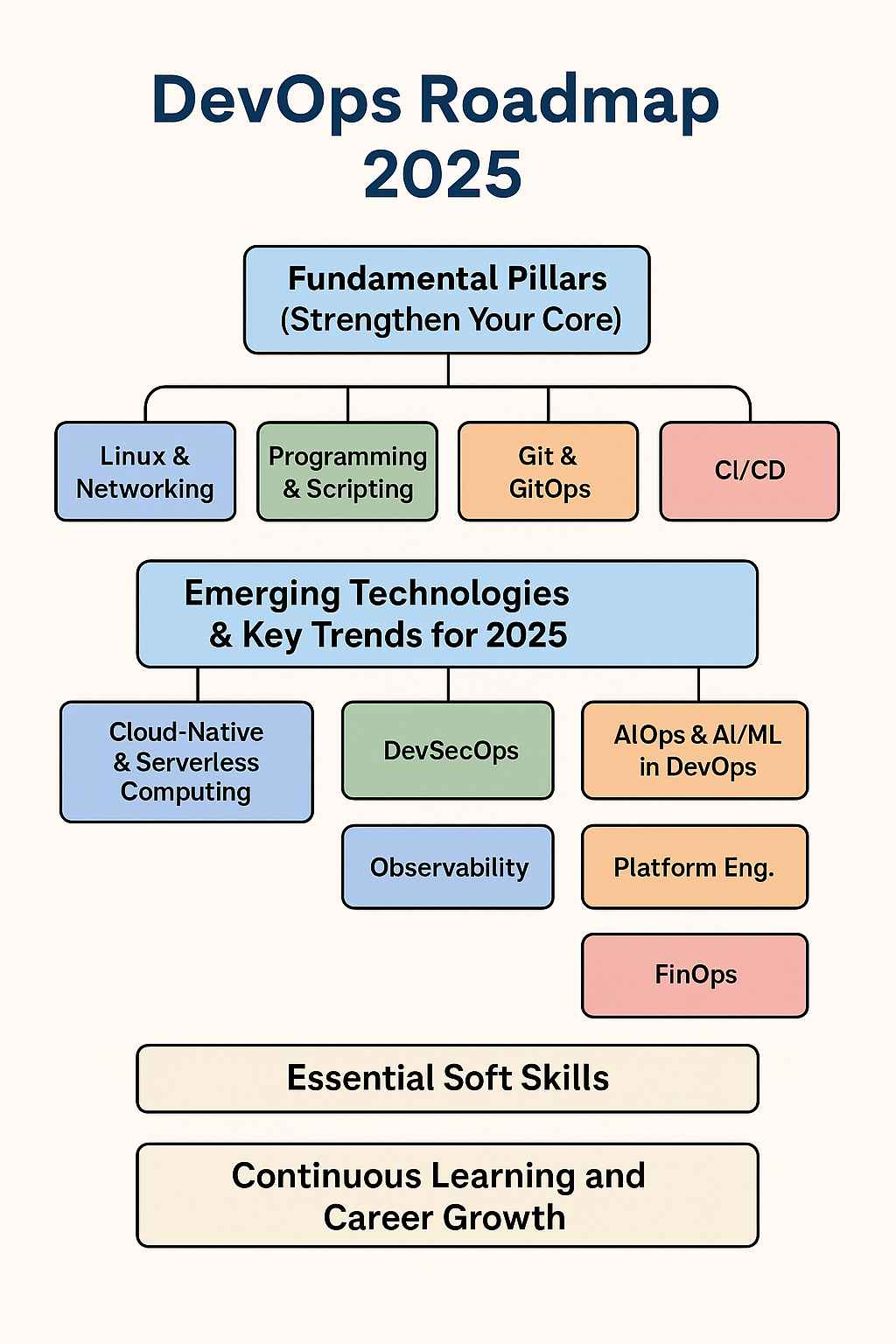
    DevOps isn’t just a buzzword anymore—it’s the foundation of how modern teams build, test, release, and manage software. In 2025, DevOps roadmap continues to evolve at lightning speed, with a stronger focus on automation, AI, security, and cloud-native tools.

    Whether you’re just starting or want to sharpen your edge, this roadmap breaks down everything you need to stay relevant and grow in the DevOps world this year. Here we can read DevOps Roadmap


    1. Master the DevOps Basics

    Before jumping into trendy tools, you need a strong core. Here’s where to start:

    Linux & Networking Skills

    • Learn Linux well: Practice shell commands, scripting, managing services, and customizing systems. Most cloud servers run Linux.
    • Understand networking: Get a grip on TCP/IP, DNS, VPNs, firewalls, and how everything connects behind the scenes.

    Programming & Scripting

    • Know at least one scripting language like Python, Go, or Bash.
    • These help you automate tasks and write scripts for deployments, monitoring, and more.

    Git & GitOps

    • Master Git: Learn how to branch, merge, rebase, and resolve conflicts confidently.
    • Learn GitOps: Use Git not just for code, but also for deploying infrastructure using tools like ArgoCD or Flux.

    CI/CD (Continuous Integration & Delivery)

    • Understand what CI/CD really means.
    • Try tools like Jenkins, GitHub Actions, GitLab CI/CD, and AWS CodePipeline.
    • Learn to add automated tests for code quality, security, and performance.

    2. Stay Ahead with 2025 DevOps Trends

    The DevOps world is shifting. These are the hot trends you should keep your eye on this year:

    Cloud-Native & Serverless

    • Be comfortable with at least one cloud: AWS, Azure, or GCP.
    • Learn Docker to containerize your apps.
    • Master Kubernetes (K8s) for managing large-scale container deployments.
    • Explore serverless platforms like AWS Lambda or Google Cloud Functions to run small apps without managing servers.

    DevSecOps (Security Built-In)

    • Shift security left: Add security checks early in your development process.
    • Automate security scans using tools like Snyk, Trivy, or Aqua.
    • Use tools like HashiCorp Vault for managing secrets safely.

    AI/ML in DevOps (AIOps & MLOps)

    • AI is entering DevOps. Learn how it helps detect problems, suggest fixes, or even write automation scripts.
    • If you’re into ML, understand MLOps to automate the full lifecycle: data → model → deployment → monitoring.

    Observability (More Than Just Monitoring)

    • Don’t just watch your systems—understand them.
    • Learn tools like Prometheus, Grafana, ELK Stack, and OpenTelemetry.
    • Set alerts and track logs, metrics, and traces to quickly catch and fix issues.

    Infrastructure as Code (IaC)

    • Write infrastructure like code using Terraform, Pulumi, or AWS CloudFormation.
    • Use Ansible, Puppet, or Chef to configure and manage your servers.

    Platform Engineering

    • Big teams are building internal platforms (IDPs) to give developers self-service tools and environments.
    • Focus on improving DevEx (developer experience) by automating routine tasks and reducing friction.

    FinOps (Cost Management for Cloud)

    • Cloud bills can get huge—learn to manage and reduce costs.
    • Use cost analysis tools, tag resources, and monitor budgets regularly.

    3. Don’t Ignore Soft Skills

    Great DevOps engineers are more than just tool experts. These soft skills matter just as much:

    • Communication: Explain complex tech in simple terms.
    • Collaboration: Work closely with developers, testers, and business teams.
    • Problem Solving: Think about systems as a whole.
    • Adaptability: Keep learning as tools and trends change.
    • User Focus: Remember—your job is to deliver value to users faster and safer.

    4. Grow Your Career (Keep Building, Keep Learning)

    Build Projects

    Hands-on work is the best teacher. Set up CI/CD pipelines, deploy on Kubernetes, or automate cloud infrastructure—even in your personal projects.

    Certifications

    Boost your credibility with these:

    • AWS Certified DevOps Engineer
    • Microsoft Certified: DevOps Engineer Expert
    • Certified Kubernetes Administrator (CKA)
    • Docker Certified Associate

    Join the Community

    Follow DevOps influencers on LinkedIn, attend meetups or conferences, and contribute to open-source projects. The community is a great place to learn and grow.

    Specialize Over Time

    As you gain experience, pick an area to go deep:

    • DevSecOps
    • Site Reliability Engineering (SRE)
    • Cloud Architecture
    • MLOps

    Final Thoughts

    2025 is the year DevOps becomes even smarter, more secure, and deeply automated. Whether you’re building your first CI/CD pipeline or managing Kubernetes at scale, there’s a place for you in this fast-growing field.

    Start small, stay consistent, and keep learning. The more you experiment and build, the more confident you’ll become.

    Next Steps

    DevOps_Roadmap_2025
    DevOps_Roadmap_2025
  • Top 7 Ways to Monetize Your DevOps Skills

    Are you a DevOps Engineer or learning DevOps and wondering how to turn your skills into a steady income? Great news — DevOps is one of the most in-demand and high-paying career paths today. But beyond just landing a full-time job, there are several creative and profitable ways to earn money using your DevOps knowledge.

    In this blog, we’ll explore multiple ways to make money as a DevOps Engineer, including active and passive income sources. Whether you’re a beginner or an experienced engineer, these ideas will help you monetize your skills and grow your income in 2025 and beyond.


    1. Full-Time Job as a DevOps Engineer

    This is the most common and stable income path for most DevOps professionals.

    • Job Titles: DevOps Engineer, SRE (Site Reliability Engineer), Cloud Engineer, Platform Engineer
    • Typical Stack: AWS, GCP, Azure, Docker, Kubernetes, Terraform, Jenkins, GitHub Actions, Ansible
    • Salary Range: $70,000 to $160,000+ per year (varies by country and experience)

    ✅ Pros: Stability, benefits, career growth
    ❌ Cons: Limited earning ceiling unless promoted


    2. Freelancing and Consulting

    Use your skills to help businesses on-demand.

    • Platforms: Upwork, Freelancer, Toptal, Fiverr
    • Services You Can Offer:
      • CI/CD pipeline setup
      • Docker & Kubernetes deployments
      • Infrastructure automation with Terraform or Ansible
      • Monitoring and alerting setup (Prometheus, Grafana)
    • Hourly Rate: $50 to $150 depending on expertise

    ✅ Pros: High earning potential, flexibility
    ✅ Pros: Work with global clients


    3. Sell DevOps Tools, Scripts, and Templates

    Turn your automation skills into digital products.

    • What to Sell:
      • Terraform modules
      • Docker Compose files
      • Prebuilt GitHub Actions workflows
      • Kubernetes deployment YAMLs
    • Platforms: Gumroad, Sellfy, Etsy (for tech downloads), or your personal blog

    ✅ Pros: Passive income potential
    ✅ Pros: Create once, sell repeatedly


    4. Start a DevOps YouTube Channel or Online Courses

    Video content is one of the best ways to educate and monetize DevOps topics.

    • Topics to Cover:
      • “How to deploy apps with Kubernetes”
      • “DevOps Roadmap for Beginners”
      • “AWS CI/CD pipeline setup”
    • Monetization Methods:
      • YouTube AdSense
      • Sponsorships from tools like DigitalOcean, Linode, JetBrains
      • Course sales (Udemy, Teachable, or self-hosted)

    ✅ Pros: Builds personal brand + recurring income
    ✅ Pros: Scalable audience


    5. Write Blogs, eBooks, and DevOps Newsletters

    If you’re not into video, writing is equally powerful.

    • Monetize Through:
      • Display ads (Google AdSense, Ezoic, Mediavine)
      • Affiliate links (AWS, hosting, courses)
      • Sell eBooks like “The DevOps Beginner’s Guide”
      • Create a paid newsletter on Substack

    ✅ Pros: Easy to start, long-term SEO value
    ✅ Pros: Grows trust and email list


    6. Build & Sell DevOps SaaS Tools

    Advanced, but extremely profitable.

    • Ideas:
      • Uptime monitoring service
      • Deployment dashboards
      • Cost-optimization tools for AWS or Kubernetes
    • Monetization: Monthly or yearly subscriptions

    ✅ Pros: Scalable recurring revenue
    ❌ Cons: Requires time, coding, and support


    7. Offer Mentorship, Coaching or Bootcamps

    Many people want to break into DevOps — you can help them.

    • Where to Offer Mentorship: Codementor, MentorCruise, ADPList
    • Other Options: Launch your own DevOps Bootcamp or private cohort-based course

    ✅ Pros: High pay per session, fulfilling work
    ✅ Pros: Build community and trust


    Summary Table: Ways to Make Money in DevOps

    MethodTypeEffortScalabilityIncome Potential
    Full-time JobActiveMediumLowHigh
    FreelancingActiveHighMediumHigh
    Sell Templates/ScriptsPassiveMediumHighMedium-High
    YouTube/CoursesSemi-passiveHighHighHigh
    Blogging/AffiliatesSemi-passiveMediumHighMedium-High
    SaaS ToolsPassiveVery HighVery HighVery High
    Mentorship/TeachingActiveMediumMediumMedium-High

    Final Thoughts

    DevOps Engineers have more income opportunities than ever. Whether you stick with a job, freelance, or start a content or product-based side hustle, the DevOps world gives you the tools to earn well — and build a name for yourself.

    Start with what you’re comfortable with. Maybe a blog or YouTube channel, then expand into freelancing or product creation.

    Ready to build a profitable DevOps side hustle? Start with a blog or YouTube channel today. Document everything you learn — it’s valuable!


    Want a step-by-step roadmap to make your first $1,000 as a DevOps Engineer? Let me know and I’ll share a weekly action plan!

    Next Steps