Author: DevOps Tech Guy

  • Why Indoor Air Is Damaging Your Health — And The Best Way To Protect Your Home

    Indoor pollution is India’s hidden health crisis.Air Purifier is best solution

    We worry about traffic smog and outdoor pollution…
    But did you know?

    Indoor air can be up to 5 times more polluted than outside air.

    We spend 90% of our time indoors — sleeping, working, cooking — yet the air inside our own home can silently trigger:

    • Continuous sneezing and cough
    • Allergies and asthma attacks
    • Dry throat and headaches
    • Weak immune system in kids
    • Poor sleep and fatigue

    This pollution is invisible, but the effects aren’t.

    So let’s uncover:

    What exactly is polluting our home
    Why this pollution is so harmful
    What we can do daily to protect our family
    And finally — the safest purification method available today


    What’s Polluting Our Homes?

    Most indoor pollution enters from windows and doors…
    But many sources are inside our home itself:

    Common SourceWhat It ReleasesHealth Risk
    Cooking Smoke & OilPM2.5, smoke, chemical fumesBreathing difficulty & chest irritation
    Dust on Furniture, BedsDust mites, allergensAllergies, sneezing, blocked nose
    Traffic PollutionPM0.01 ultrafine particlesEnters bloodstream → long-term health risks
    PetsHair, fur, danderTriggers asthma & allergies
    Humidity & Damp AreasMold spores & harmful bacteriaLung infections & breathing problems
    Paint, Cleaning Sprays, PolishesVOC toxic chemicalsHeadache, burning eyes, nausea

    ⚠️ The Real Danger: Ultrafine Particles

    We often hear about PM 2.5 pollution…

    But the most dangerous particles are even smaller:

    ParticleSizeHealth Impact
    PM2.52.5 micronsEnters the lungs and causes breathing problems
    PM0.10.1 micronsPenetrates deeper into the bloodstream
    PM0.010.01 micronsTravels to vital organs and causes long-term damage

    These particles are 100X smaller than PM2.5, but cause 100X more harm.

    Plus, viruses and bacteria also travel through air.

    That’s why more families are facing:

    • Morning sneezing attacks
    • Chest tightness
    • Children falling sick repeatedly
    • Sleeping with blocked nose

    This is not normal — it’s indoor illness.


    What Can We Do to Protect Ourselves?

    Here are practical prevention tips:

    TipWhy It Helps
    Vacuum/Mop WeeklyRemoves dust mites, pollen, and allergens from surfaces
    Use Exhaust Fan While CookingLowers kitchen smoke and toxic fumes
    Keep Shoes OutsidePrevents outdoor dirt and pollutants from entering home
    Avoid Incense & Candles IndoorsReduces smoke and harmful chemical emissions
    Open Windows Only During Low-Traffic HoursAvoids polluted outdoor air entering during peak traffic

    However…

    Even if you follow all practices, ultrafine particles and viruses remain in air.

    And no plant, broom, or scented spray can remove them.

    So what’s the real solution?


    Why a High-Quality Air Purifier Is Now Essential

    The only proven way to eliminate:

    ✔ PM0.01
    ✔ Viruses & germs
    ✔ Allergens & pet dander
    ✔ Smoke & odors

    …is a purifier with True HEPA filtration.

    But not all purifiers are equal.

    You must check:

    FeatureWhy It Matters
    Filtration down to PM0.01Protects from ultrafine harmful particles invisible to the eye
    Virus Removal EfficiencyEnsures better health safety for kids, elders & allergy-prone members
    Long Filter LifeReduces maintenance cost and frequent replacements
    Strong Airflow CoverageEffectively purifies the entire room, not just one area
    Low Noise OperationSupports peaceful sleep and uninterrupted work
    Reliable WarrantyProvides long-term durability and confidence in the product

    And one product stands out clearly in all these areas…


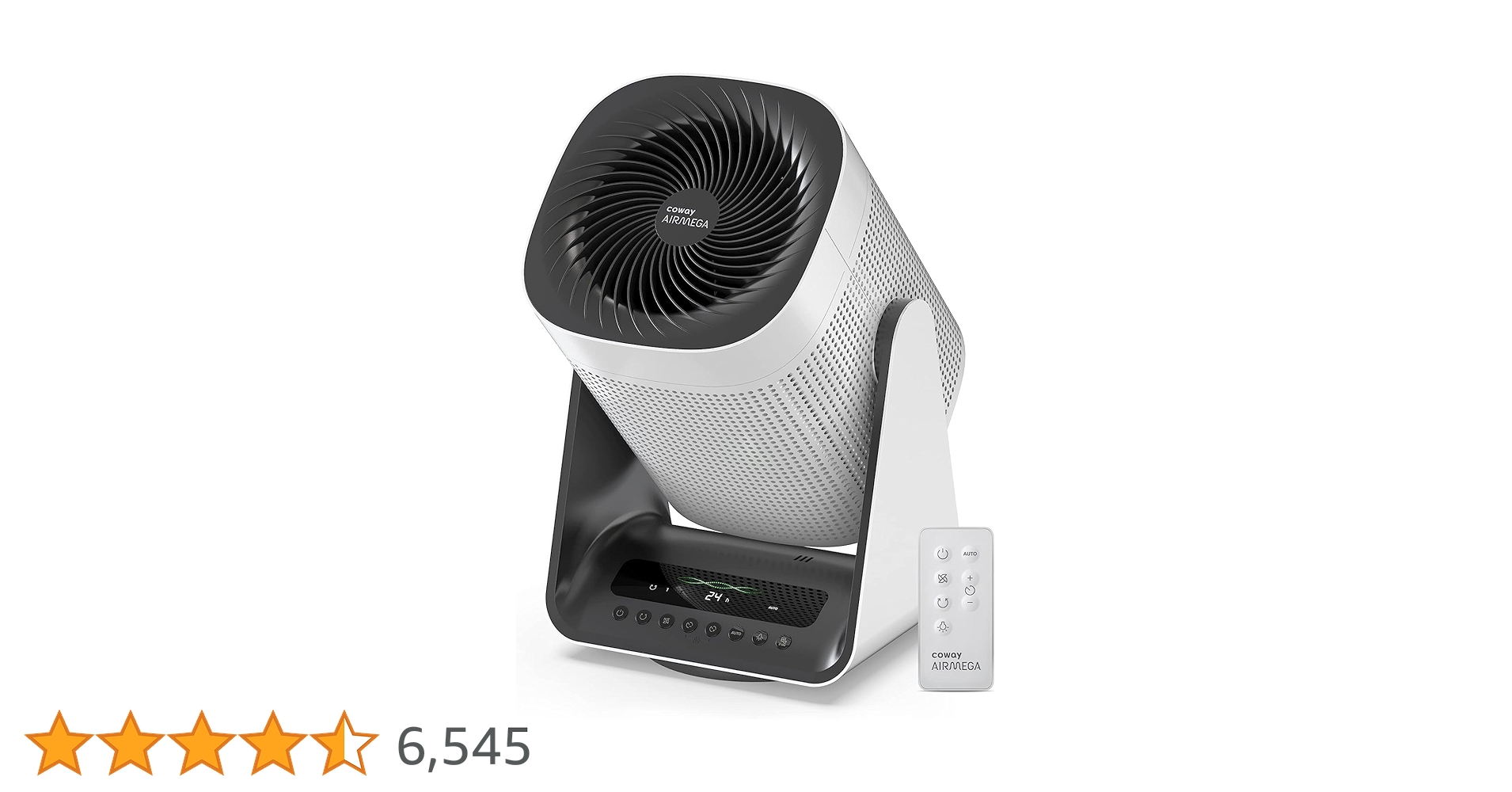
    Introducing Coway Airmega AIM (AP-0623B) — The Safest Air For Your Home
    https://m.media-amazon.com/images/I/71kd66J0MlL.jpg_BO30%2C255%2C255%2C255_UF900%2C850_SR1910%2C1000%2C0%2CC_PIRIOFOURANDHALF-medium%2CBottomLeft%2C30%2C-20_ZJPHNwYW4gZm9yZWdyb3VuZD0iIzU2NTk1OSIgZm9udD0iQW1hem9uRW1iZXIgNTAiID42LDU0NTwvc3Bhbj4%3D%2C500%2C900%2C420%2C420%2C0%2C0_QL100_.jpg

    Coway is a South Korean air purifier specialist — trusted in hospitals and allergy clinics worldwide.

    This particular model is designed specifically for Indian homes.


    How It Solves Indoor Pollution Completely

    ProblemCoway’s Solution
    Ultrafine pollution (PM0.01)Removes 99.999% ultrafine particles for safe breathing
    Virus & bacteria in airGreen True HEPA filter sterilizes harmful microorganisms
    Poor airflow in room cornersOscillating airflow spreads purified air evenly
    High filter replacement cost8500-hour filter life (~1.5–2 years) saves money
    Loud noise during sleepWhisper-silent Auto Mode ensures peaceful nights
    Frequent repairs with other brands7-year motor warranty for long-term reliability

    With Coway, you breathe air as pure as a clean hill station inside your room.


    Perfect Room Coverage

    • Ideal for Bedrooms
    • Indian living rooms (up to 355 sq.ft)
    • Baby/Kids room
    • Home office space

    Real-World Benefits

    • Kids wake up without sneezing
    • No cough or dust smell in the room
    • Better sleep quality
    • Safe breathing for older parents
    • Zero pet odor indoors

    Families notice improvements within 1 week


    Expert Review: Coway Airmega AIM

    CategoryRatingVerdict
    Air Purification⭐⭐⭐⭐⭐Top class
    Filter Life⭐⭐⭐⭐⭐Saves money long-term
    Noise⭐⭐⭐⭐☆Quiet, except on highest speed
    Coverage⭐⭐⭐⭐☆Ideal for medium-sized rooms
    Ease of Use⭐⭐⭐⭐⭐Plug in and breathe clean air
    Warranty⭐⭐⭐⭐⭐Industry-best reliability

    Should You Buy It?

    This purifier is perfect for:

    ✔ People with allergies/asthma
    ✔ Homes near traffic, construction, industries
    ✔ Families with kids or pets
    ✔ Anyone facing sneezing/cough indoors
    ✔ Health-focused households


    Final Verdict

    ❤️ If your top priority is your family’s health…
    💪 And you want real protection against viruses and ultrafine dust…

    Coway Airmega AIM is one of the best air purifiers you can buy in India today.

    Reliable, medically trusted, long-lasting —
    a true health investment, not just a gadget.


  • DevSecOps: Why It Matters in Modern Software Development

    In today’s digital world, attackers develop new tricks every day. They target software, servers, cloud systems, and even developers who write the code. That’s why security can’t be an afterthought anymore that is why DevSecOps and Security is very important.

    Modern companies are shifting from traditional development to DevSecOps — a culture where Security is part of every step in software development.


    What is DevSecOps?

    Traditional workflow:

    Develop product first → test security later

    Problem: By the time security issues are found, it is too late and too costly to fix.

    DevSecOps workflow:

    Security is included from Day 1

    It combines:

    • Dev → Development
    • Sec → Security
    • Ops → IT Operations

    Simple definition:

    DevSecOps = Build fast + Secure fast + Deliver continuously


    Why Do We Need DevSecOps?

    https://www.malwarebytes.com/wp-content/uploads/sites/2/2019/01/shutterstock_789122527.jpg

    Here are real-world problems DevSecOps solves:

    ProblemDevSecOps Solution
    Frequent cyber-attacksSecurity built into pipeline reduces vulnerabilities
    Data breachesAutomated scanning stops risky deployments
    Security delays releasesAI tools speed up compliance checks
    Developer mistakes go unnoticedContinuous code scanning catches issues early

    Bottom line:
    Fixing small issues early → saves money, time, trust, and reputation.


    How DevSecOps Works (Step-by-Step)

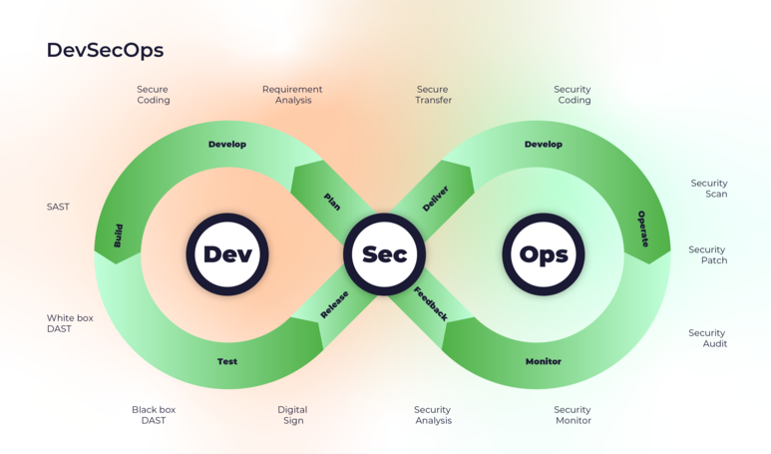
    https://intercept.cloud/media/odhphmpx/devsecops.webp?height=454&rmode=max&width=772

    DevSecOps includes security in every stage:

    StageWhat HappensSecurity Step
    PlanRequirements and designThreat modeling
    CodeDevelopers write codeSAST → Static code analysis
    BuildApplication is packagedDependency scanning
    TestQA and functional testsDAST → Dynamic security testing
    ReleaseReady for deploymentCompliance checks
    DeployCI/CD pipeline pushes to serversInfrastructure & secrets security
    OperateProduction monitoringLogs + SIEM
    MonitorContinuous trackingVulnerability alerts

    This creates a continuous security loop.


    AI + DevSecOps = Future of Secure Development

    AI-powered tools help by:
    Detecting threats in seconds
    Automating compliance checks
    Reducing manual effort
    Predicting attack patterns

    Examples of AI-driven DevSecOps tools:

    • Snyk
    • GitHub Advanced Security
    • Aqua Security
    • Prisma Cloud
    • CrowdStrike Falcon

    AI helps secure everything without slowing down development speed.


    Key Practices in DevSecOps

    PracticeSimple Meaning
    Shift-Left SecurityStart security early in development
    Zero-TrustNo user/system is trusted by default
    Infrastructure as Code SecuritySecure cloud & servers through code
    Secrets ManagementProtect API keys, tokens, passwords
    Continuous MonitoringReal-time attack detection

    DevSecOps in Cloud & CI/CD

    Cloud services like AWS, Azure, GCP are used constantly today.
    Security must cover:

    Containers (Docker, Kubernetes)
    Serverless functions
    Multi-region cloud resources
    API Gateways
    Network firewalls

    CI/CD pipelines must:

    • Scan every build
    • Block deployment if risk exists
    • Auto-fix vulnerabilities wherever possible

    Benefits of DevSecOps (Why Every Company Wants It)

    BenefitImpact
    Faster release cyclesStill secure, no delays
    Lower security costFix early = cheaper
    Better product trustCustomers feel safe
    Less manual workMore automation
    Compliance made simpleEasy audits & regulations

    Challenges (But We Can Overcome Them)

    ChallengeFix
    Developers lack security knowledgeTraining and automation
    Too many alertsAI-based filtering
    Legacy systemsGradual transformation
    Culture resistanceCollaboration & awareness

    DevSecOps Job Roles

    If someone wants a career in DevSecOps, roles include:

    • DevSecOps Engineer
    • Cloud Security Engineer
    • Application Security Engineer
    • Security Automation Engineer
    • CI/CD Security Specialist

    Excellent career growth + high salary demand


    Final Thoughts

    Security today is not optional.
    Every product must be:

    Fast
    Reliable
    Secure

    DevSecOps makes sure security becomes everyone’s responsibility, not just the security team.

    "Secure from the start. Secure forever."


    Next Steps :

  • Kickstarting Your DevOps Career: Roadmap & Real Responsibilities

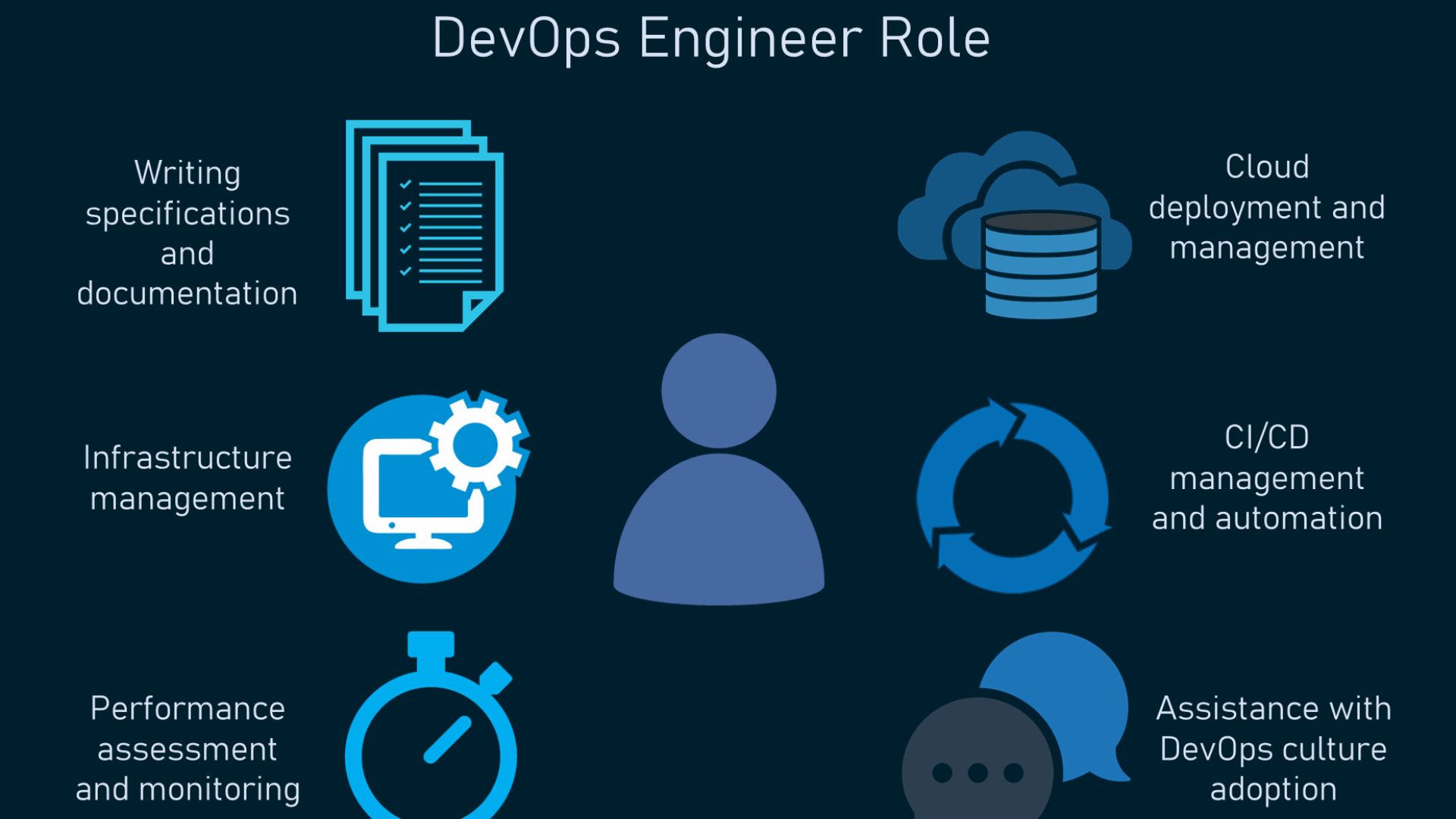
    As a DevOps Engineer Roles and Responsibilities, my mission is to improve how software moves from development to production, faster, safer, automated.

    Devops Engineer Roles and Responsibilities:

    • Automate builds, testing, deployments (CI/CD)
    • Manage infrastructure (cloud: AWS/Azure/GCP)
    • Implement monitoring, logging & alerting
    • Improve system reliability, security, scalability
    • Support developers and operations with tools & processes

    I ensure smooth delivery of features without breaking things.


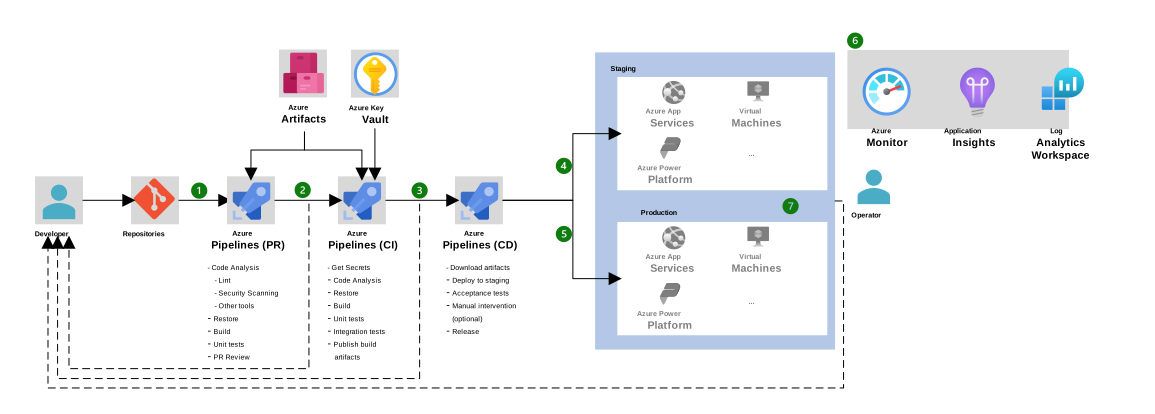
    https://learn.microsoft.com/en-us/azure/devops/pipelines/architectures/media/azure-devops-ci-cd-architecture.svg?view=azure-devops

    My Career Journey in Tech

    • Started by learning Linux & networking basics
    • Git + automation scripts (Bash/Python)
    • Learned CI/CD tools (Jenkins/GitHub Actions)
    • Adopted Containers & Kubernetes
    • Worked hands-on with real cloud infrastructure
    • Continuous learning is important. Focusing on Observability, Security, SRE mindset.

    Skills, Certifications & Experiences That Helped Me Grow

    Core Skill Categories:

    Skill AreaTools / Concepts
    OS & NetworkingLinux, SSH, DNS, Firewalls
    Version ControlGit, branching strategies
    Build & CI/CDJenkins, GitHub Actions, GitLab
    CloudAWS / Azure / GCP/ Oracle
    ContainersDocker, Kubernetes
    Infra as CodeTerraform, CloudFormation
    MonitoringPrometheus, Grafana
    SecurityDevSecOps, Secrets Mgmt

    Helpful Certifications:

    • AWS Cloud Practitioner / Solutions Architect
    • CKA / Kubernetes Admin
    • Docker or Linux certifications
    • DevOps Foundation (optional but a good start)

    Hands-on Experience:

    • Deploy apps continuously, break things, fix things
    • Work with real cloud projects (personal or internship)
    • Debug failures — logs, metrics, alerts

    Skills grow fastest through projects + failures + reflection.


    How Each Team Contributes to the Software Lifecycle

    TeamResponsibilityDevOps Contribution
    DevelopmentWrite code & featuresEnsure smooth integration & automated testing
    QA / TestingValidate functionalityEnable automation, shift-left testing
    SecurityProtect system & dataBuild DevSecOps pipelines (integrated scanning)
    Operations (SRE/Infra)Run in productionAutomated deploys, monitoring, reliability

    We remove friction between teams and create One Team delivering value continuously.


    Collaboration & Handoff Points

    Where DevOps coordinates most:

    • Feature planning → Infra readiness
    • Code merge → Automated build & test pipelines
    • Deployment → Blue-green & rollbacks
    • Incident management → RCA & improvement

    Final Messages

    DevOps is not just tools.
    DevOps is understanding problems, automating solutions, and working as one team.

    If you focus on:
    Learning fundamentals
    Building automation
    Being curious
    Continuous improvement

    …you will grow very fast in this field

    Next Steps :

  • Fundamental Concepts & First Principles of DevOps

    DevOps is not just a toolset — it’s a mindset and a business advantage.Its purpose is simple. we will see the Fundamental Concepts & First Principles of DevOps.

    To understand deeply, we must start from its first principles — also known as The Three Ways.


    The Three Ways of DevOps (Core First Principles)

    1. Flow — The First Way

    Increase the speed of work moving from Development → Operations → Customers.

    How?

    • Systems Thinking: Analyze the entire value stream end-to-end
    • CI/CD: Automate build → test → release
    • Reduce handoffs, remove bottlenecks

    Goal → Deliver updates faster and with higher quality


    2. Feedback — The Second Way

    Create fast and continuous feedback loops.

    How?

    • Real-time monitoring + logging
    • Shift-Left: testing and security earlier in lifecycle
    • Quick detection → quick correction

    Goal → Fix issues before customers notice


    3. Continuous Learning & Experimentation — The Third Way

    Build a blameless, innovative culture.

    How?

    • Learn from failures, not punish them
    • Encourage experiments, small frequent changes
    • Apply Lean principle → Kaizen (continuous improvement)

    Goal → Organization keeps improving forever


    Culture + Process + Technology

    ValueMeaning
    Shared ResponsibilityDev & Ops accountable together
    Collaboration & EmpathyRemove silos
    Psychological SafetyFailures = learning
    Product ThinkingFocus on customer value

    Technical Foundations You Must Master

    ConceptWhy It Matters
    AutomationRemove slow manual tasks
    Infrastructure as CodeReproducible, versioned environments
    Version ControlTrack every change (Git is essential)
    ObservabilityKnow what’s happening in production
    Security IntegrationDevSecOps ensures safety by design

    DevOps Core Knowledge Areas (Skill Map)

    PhaseWhat to LearnKey Tools
    FoundationsLinux, Git, Networking, ScriptingBash, Python
    Automation & CI/CDBuild & test automationGitHub Actions, Jenkins, GitLab CI
    Infrastructure & OrchestrationContainers, IaC, cloud infraDocker, Kubernetes, Terraform, Ansible
    Cloud & ObservabilityMonitoring, logs, tracingAWS/GCP/Azure, Prometheus, Grafana, ELK

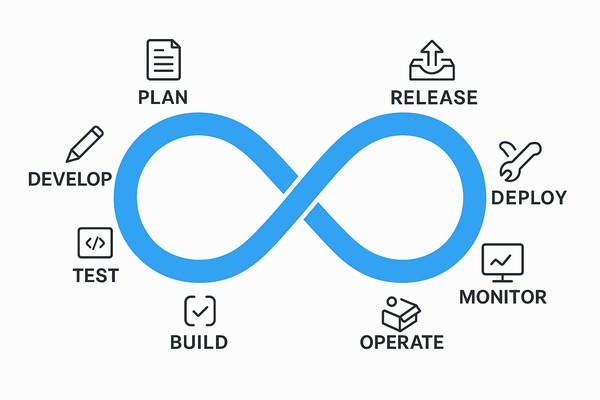
    DevOps Lifecycle Summary (Infinite Loop)

    This loop emphasizes:
    Continuous flow
    Continuous improvement
    Continuous feedback


    Real-World DevOps Example (Short & Clear)

    StageAction
    CodeDeveloper pushes code to GitHub
    Build & TestCI pipeline automates code compilation + testing
    DeployCD pipeline deploys app to Kubernetes
    MonitorLogging + metrics detect issues instantly
    ImproveFix fast → redeploy safely

    That’s the heart of DevOps.


    Reality DevOps Interview Questions + Best Answers

    Here are 8 practical interview-quality Q&A you can publish:


    Q1: Why do companies adopt DevOps?

    Answer:
    To increase delivery speed, reduce failures, improve reliability, and deliver maximum business value continuously.
    Dev + Ops → one single delivery team instead of silos.


    Q2: Difference between CI and CD?

    CI (Continuous Integration)CD (Continuous Delivery/Deployment)
    Code merged frequently + auto testsCode auto-released to staging/production
    Improves code qualityImproves release speed & reliability

    Q3: What does “Shift Left” mean?

    Move security and testing earlier in the pipeline so issues are caught before production.


    Q4: What problem does IaC solve?

    Removes manual configuration
    Ensures repeatable deployments
    Enables version-controlled infrastructure

    Tools: Terraform, CloudFormation, Ansible, Pulumi


    Q5: DevOps vs SRE?

    DevOpsSRE
    Culture + practicesEngineering discipline implementation
    Focus on delivery processFocus on reliability with SLIs/SLOs

    Both complement each other.


    Q6: What is Observability?

    Knowing the internal state of a system by analyzing:

    • Logs
    • Metrics
    • Traces
      Helps predict issues before failures.

    Q7: What is “Blameless Post-Mortem”?

    Instead of blaming individuals for outages, analyze process or system failures → improve continuously.


    Q8: Is DevOps a Tool or a Role?

    DevOps is primarily a culture & set of practices.
    Tools help execute that philosophy.

    Next Steps :

  • How to prioritize which DevOps skills to learn first

    To prioritize which DevOps skills to learn first, focus on building a strong foundation in the core competencies that will enable you to effectively contribute to DevOps processes and projects early on. Here’s a recommended approach

    Step 1: Learn Operating Systems + Scripting

    DevOps runs mostly on Linux — so start here!

    • Learn Linux basics (commands, users, permissions, services)
    • Practice Shell scripting (Bash)
    • Learn Python to automate tasks

    This gives you the power to control systems efficiently and it is must DevOps skills to learn.


    Step 2: Master Git + CI/CD Pipelines

    Version control is required everywhere:

    • Learn Git (branching, merging, GitHub/GitLab)
    • Understand CI/CD concepts
    • Start using tools like:
      • Jenkins
      • GitHub Actions
      • GitLab CI

    This helps automate software delivery.


    Step 3: Infrastructure as Code (IaC) + Configuration Management

    DevOps = automation everywhere.

    • Learn Terraform for provisioning infrastructure
    • Learn Ansible or Puppet to configure servers automatically

    These tools help manage systems at scale.


    Step 4: Containers + Kubernetes

    Most modern apps run in containers.

    • Start with Docker (images, containers, registries)
    • Then learn Kubernetes (pods, deployments, clusters)

    This skill is one of the most important for DevOps jobs in 2025 and beyond.


    Step 5: Monitoring + Logging

    To keep systems healthy, you must track performance:

    Tools to learn:

    • Prometheus (metrics & alerts)
    • Grafana (dashboards)
    • ELK Stack or Splunk (log analysis)

    This helps detect issues before users are impacted.


    Step 6: Networking + Security Basics

    Every DevOps role requires:

    • Basic networking (DNS, firewalls, ports, routing)
    • DevSecOps awareness
    • Security best practices

    Security must be integrated into every step of DevOps.


    Step 7: Soft Skills

    DevOps = collaboration between teams.

    Work on:

    • Communication
    • Teamwork
    • Problem-solving
    • Analytical thinking

    These skills make you stand out.


    Learn Based on Your Career Goals

    If you’re already working in:

    • Cloud environments → Learn AWS/Azure + cloud certifications
    • Development teams → Focus more on CI/CD + automation
    • Operations roles → Start with Linux + IaC + monitoring

    There’s no single right path — choose skills that match your interests.


    Final Thoughts: Keep Learning and Building

    DevOps is a fast-changing world.
    The best way to grow is by practicing:

    Work on labs
    Build real projects
    Contribute to automation
    Experiment with new tools

    Following this roadmap gives you:
    A strong foundation
    Job-ready skills
    Clear path to senior DevOps engineering roles

    Next Steps :

  • ISRO CMS-03 Satellite Launch: Strengthening India’s Ocean Communication Power

    🌍 What Happened?

    ISRO successfully launched the ISRO CMS-03 satellite, also known as GSAT-7R, on November 2, 2025.
    It was carried into space by India’s most powerful rocket, the LVM3-M5, often called “Bahubali” for its strength.

    At 4,410 kg, ISRO CMS-03 satellite became the heaviest communication satellite ever launched from Indian soil. This achievement, therefore, marks another major leap in India’s journey toward space self-reliance

    Date of Launch: November 2, 2025
    Launch Vehicle: LVM3-M5 (“Bahubali”)
    Launch Site: Satish Dhawan Space Centre, Sriharikota


    Why Was ISRO CMS-03 satellite Launched?

    India’s Navy depends heavily on satellites to stay connected across the vast Indian Ocean.
    The old GSAT-7 (Rukmini) satellite launched in 2013 had started aging and couldn’t handle the new generation of high-speed, secure communication needed by modern defense forces.

    So, ISRO CMS-03 satellite was launched to replace GSAT-7 and provide:
    Stronger, faster, and safer communication links
    Better coverage over wide ocean areas
    Reliable connections for ships, submarines, aircraft, and naval bases


    What Problem Does It Solve?

    1. Outdated Communication Systems

    Older satellites had limited bandwidth and slower data transfer.
    CMS-03 brings multi-band technology (C, Extended C, and Ku bands) that allows faster, high-capacity communication — perfect for real-time operations.

    2. Limited Ocean Coverage

    India’s Navy operates across thousands of kilometers of ocean.
    CMS-03 extends coverage across the entire Indian Ocean Region, ensuring constant, encrypted communication even in remote waters.

    3. Security Risks

    In an era of digital warfare, communication must be encrypted and interference-free.
    CMS-03 offers secure, military-grade communication, helping the Navy protect its networks from hacking or interception.

    4. Civilian Connectivity Gaps

    Beyond defense, CMS-03 also supports digital access for remote islands and coastal areas, improving internet and telecom services where fiber networks can’t reach.


    How Does It Work?

    CMS-03 carries advanced transponders that can transmit voice, video, and data securely through space.
    It orbits in Geosynchronous Transfer Orbit (GTO) — meaning it stays fixed relative to Earth, ensuring stable communication 24/7.


    WhyI SRO CMS-03 satellite a Big Deal for India

    • Shows India can build and launch heavy satellites on its own
    • Strengthens maritime security and defense communication
    • Boosts digital reach to distant parts of the nation
    • Proves ISRO’s growing self-reliance in space technology

    Final Thought

    The CMS-03 launch isn’t just another satellite mission — it’s a strategic milestone.
    It ensures India’s Navy stays connected, protected, and prepared in the digital age while also bringing communication access to areas beyond the reach of cables.

    With ISRO CMS-03 satellite, India has strengthened its voice — both on Earth and in space

    Next Steps :

  • DevOps vs SRE differences and when to use each

    DevOps and Site Reliability Engineering (SRE) have overlapping goals but differ significantly in focus, responsibilities, and approaches. we will see DevOps vs SRE differences in this article.

    Key Differences

    Focus:

    • DevOps focuses on the entire software development lifecycle, emphasizing collaboration between development and operations to deliver features quickly and reliably.
    • SRE focuses narrowly on system reliability, scalability, and stability in production, ensuring that changes do not increase failure rates or disrupt user experience.

    Responsibilities:

    • DevOps teams build and deploy new features, streamlining development and deployment pipelines with continuous integration and delivery practices.
    • SRE teams ensure production systems remain highly available and performant, using engineering practices to automate operations, monitor production, and handle incidents proactively.

    Objectives:

    • DevOps aims to accelerate product development and delivery to meet customer needs.
    • SRE aims to maintain service uptime and reliability, often setting and enforcing service-level objectives (SLOs) and error budgets.

    Team Structure:

    • DevOps teams integrate roles across software development and operations.
    • SRE teams consist of engineers skilled in both software and operations, focusing deeply on reliability engineering.

    Approach to Failures:

    • DevOps is more reactive, fixing problems as they appear and focusing on fast delivery.
    • SRE is proactive, analyzing root causes, performing chaos engineering, and preventing failures before they occur.

    When to Use Each

    • Use DevOps when you want to improve collaboration between development and operations, speed up software delivery, and implement continuous integration/delivery pipelines.
    • Use SRE when your priority is to maintain high reliability and availability of systems at scale, reduce downtime, and manage operational risk through data-driven reliability engineering practices.

    Main Differences: DevOps vs SRE

    FeatureDevOpsSRE
    Primary GoalSpeed & DeliveryReliability & Stability
    Main FocusEntire SDLC (plan → deploy)Production systems
    Mindset“Move fast”“Don’t break things”
    Approach to IssuesReactive + Continuous improvementProactive + Automated
    Key MetricsDeployment frequency, delivery timeUptime, error rate
    Who does it?Developers + Ops teamsSpecialized reliability engineers

    In essence, DevOps defines the broad culture and practices for faster development and deployment, while SRE applies engineering rigor to keep those deployed systems reliable in production. Organizations often integrate both for achieving fast, stable, and scalable software delivery

    Final Thoughts

    DevOps + SRE Better Together

    Here’s the secret:
    Most organizations don’t choose one over the other.

    DevOps = culture + speed
    SRE = discipline + reliability

    Together, they create a balanced system:

    • DevOps pushes updates quickly
    • SRE ensures updates don’t break the system

    Fast + Stable = Happy Users + Happy Business

    Next Steps :

  • AWS Well-Architected Framework: Building Reliable and Scalable Cloud Systems

    When we move our workloads to the cloud. it is not about spinning up servers or deploying apps.it is about building something that lasts forever. Something that’s secure, efficient and ready to scale as your business grows. That’s where the AWS Well-Architected Framework comes in.

    It helps cloud architects, developers and devops teams make better decisions while designing systems that are resilient, secure and optimized for performance and cost.


    What Is the AWS Well-Architected Framework?

    AWS Well-Architected Framework is a collection of key concepts, design principles and best practices for designing and running workloads in the cloud.


    The Six Pillars of AWS Well-Architected Framework

    The framework is built around six core pillars


    1. Operational Excellence

    Goal: Run and monitor systems effectively to deliver business value and continuously improve.
    This pillar focuses on automation, monitoring and incident response.
    You learn to document everything, evolve your procedures, and design systems that can be easily operated.

    Key takeaway: Build operations as code. Automate repetitive tasks and always keep improving.


    2. Security

    Goal: Protect data, systems and assets using cloud-native security practices.
    AWS encourages a defense-in-depth approach—secure every layer from identity and access to data encryption.

    Key takeaway: Security is everyone’s responsibility. Protect, detect and respond continuously.


    3. Reliability

    Goal: Ensure your workload performs correctly and consistently even when things go wrong.
    It’s all about resiliency, fault tolerance and disaster recovery. Design for failure because in the cloud, it’s inevitable, but manageable.

    Key takeaway: Don’t hope systems won’t fail design them to recover when they do.


    4. Performance Efficiency

    Goal: Use computing resources efficiently to meet system requirements and maintain performance as demand changes.
    This means choosing the right instance types, storage options and database solutions to optimize speed and scalability.

    Key takeaway: Continuously review and evolve your architecture as technology evolves.


    5. Cost Optimization

    Goal: Avoid unnecessary costs and maximize the business value from every dollar spent.
    AWS gives you visibility and tools like Cost Explorer and Budgets to monitor and control spending.

    Key takeaway: Pay only for what you use—and always look for smarter ways to save.


    6. Sustainability

    Goal: Minimize the environmental impact of your cloud workloads.
    This newer pillar focuses on using resources responsibly, choosing energy efficient regions and optimizing workloads to reduce carbon footprint.

    Key takeaway: Build green architectures that are efficient and sustainable for the planet.


    Why It Matters

    Applying the AWS Well-Architected Framework ensures your systems are resilient, cost-effective, and future-ready.
    Whether you’re a startup building your first cloud app or an enterprise migrating legacy workloads, this framework acts as your trusted compass in the cloud journey.

    By regularly reviewing your workloads against the six pillars, you’ll not only identify risks early but also make informed improvements that drive long-term success.


    Final Thoughts

    Cloud architecture isn’t just about deploying resources—it’s about building smart, secure, and sustainable systems.
    The AWS Well-Architected Framework provides the guidance to help you do exactly that balancing performance, cost, and reliability while keeping security and sustainability at the heart of it all.

    So the next time you design or review a workload, remember these six pillars — they’re not just best practices, they’re the foundation of every great cloud architecture

    What’s Next?

    The journey is ongoing. I’m glad to have you along for the ride.

    Devops tutorial :https://www.youtube.com/embed/6pdCcXEh-kw?si=c-aaCzvTeD2mH3Gv

  • Essential Ports and Protocols Every DevOps Engineer Should Know

    As a DevOps engineer, your work doesn’t stop at CI/CD pipelines or writing infrastructure-as-code. You’re also a bridge between development, operations, and the underlying network that makes everything talk to each other.should know Ports and Protocols.

    And here’s the truth: if you don’t understand the ports and protocols your systems rely on, troubleshooting production issues or securing them becomes a nightmare.

    So let’s break down the networking essentials every DevOps engineer should know — the ports and protocols, and why they matter in your daily workflow.

    1. Core Web and Application Protocols

    These are the backbone of Application — if your app touches the internet, you’re using these.

    ProtocolPortTransportWhy It Matters for DevOps
    HTTP (Hypertext Transfer Protocol)80TCPHandles unsecured web traffic. Typically used for redirects to HTTPS. Make sure your web servers (like Nginx or Apache) listen here only for redirection.
    HTTPS (HTTP Secure)443TCPEncrypts web communication using SSL/TLS. Ingress controllers, CDNs, and app servers must handle TLS certificates and termination correctly.
    DNS (Domain Name System)53UDP/TCPResolves domain names to IPs. Misconfigured DNS can break deployments, service discovery, or even CI/CD pipelines.

    Always validate your DNS records and automate certificate renewals (using something like cert-manager in Kubernetes).


    2. Infrastructure & Remote Access Protocols

    You’ll use these daily for server management, deployments, and automation.

    ProtocolPortTransportWhy It Matters
    SSH (Secure Shell)22TCPThe lifeline for secure remote access to Linux/Unix servers and CI/CD agents. Best practice: Change the default port and restrict access via firewalls or security groups.
    RDP (Remote Desktop Protocol)3389TCPUsed for graphical access to Windows servers. Even if you’re mostly cloud/Linux, it’s essential when managing Windows build agents or hybrid environments.

    Lock down SSH and RDP to specific IPs or use bastion hosts — never expose them directly to the internet.


    3. Database & Messaging Protocols

    If your app stores or moves data, these ports are the lifelines. They also happen to be common attack targets.

    ProtocolPortTransportWhy It Matters
    MySQL3306TCPStandard for MySQL/MariaDB. Should never be publicly accessible allow only internal traffic.
    PostgreSQL5432TCPPopular open-source database. Same rule: restrict access tightly.
    MongoDB27017TCPDefault MongoDB port. Enable authentication and firewall restrictions.
    Redis6379TCPUsed for caching and session storage. Protect it — Redis often holds sensitive in-memory data.
    MQTT1883 / 8883 (secure)TCPCommon in IoT and microservice messaging. Know these if managing brokers like Mosquitto.

    Treat database ports like secrets — only your app should be talking to them.


    4. Operational & Monitoring Ports

    These keep your systems observable, automatable, and healthy.

    Tool / ServicePortTransportWhy It Matters
    Jenkins8080TCPDefault for Jenkins and many CI/CD tools. Watch for port conflicts in shared environments.
    Prometheus9090TCPExposes metrics for scraping. Make sure Grafana or other dashboards can reach it.
    Grafana3000TCPDefault web UI for visualization dashboards.
    Kubernetes API Server6443TCPThe control plane’s main entry point. Lock it down with RBAC and network policies.
    Health ChecksVaries (e.g., 8080/8081)TCPUsed by Kubernetes or load balancers for readiness/liveness probes. Keep them lightweight and reliable.

    Ports Are Policy

    Understanding ports isn’t just about memorizing numbers — it’s about enforcing good security and operational practices.

    Here’s how to apply this knowledge:

    • Principle of Least Privilege: Only open what’s absolutely necessary. Close everything else.
    • Use FQDNs over IPs: DNS simplifies environment management and scaling — let names handle the routing.
    • Audit Regularly: Tools like ss, netstat, or Kubernetes kubectl port-forward can show you exactly what’s exposed.
    • Embrace HTTPS: Port 80 should exist only to redirect traffic to 443. Automate SSL/TLS renewal and rotation.

    Final Thoughts

    Networking isn’t just the concern of your infrastructure team .it’s part of your DevOps DNA. By mastering ports and protocols, you’re not just connecting services; you’re building reliable, secure, and scalable systems that stand strong under real-world traffic.

    After all, every deployment travels across the network — make sure you understand the roads it takes

    What’s Next?

    The journey is ongoing. I’m glad to have you along for the ride.

    Devops tutorial :https://www.youtube.com/embed/6pdCcXEh-kw?si=c-aaCzvTeD2mH3Gv

  • How I Used AWS re/Start Program in India to Start My DevOps Career

    Hello, Friends. Many people think starting a career in AWS,cloud or DevOps requires Thousand of rupees for training or bootcamps. I’m here to tell you from my own experience — you don’t need to spend a single rupee to begin.

    I’m from a non-IT background Leather Technology graduate and today I’m a DevOps Engineer. My journey began with the AWS re/Start program — a free cloud training program supported by Amazon Web Services and delivered by partner organizations across India.

    If you are unemployed, switching careers, or simply don’t have the money for expensive coaching, this is one of the best opportunities available.


    What is AWS re/Start?

    Free, full-time cloud training with no hidden fees is available for aspiring professionals. The program covers essential topics such as Linux, networking, AWS services, Python, security, and DevOps basics. In addition to technical skills, it also includes soft skills training like communication, teamwork, resume building, and mock interviews.

    Upon successful completion, participants gain access to interview opportunities with hiring partners, helping them launch their careers in the cloud domai


    AWS re/Start Training Partners in India

    You can apply to these organizations (all free):

    • Dhyanahitha Educational Society
    • Don Bosco Tech Society
    • EduBridge
    • Generation India Foundation
    • HOPE Foundation
    • JobsAcademy (2COMS Group)
    • Magic Bus India Foundation
    • Tata STRIVE (Tata Community Initiatives Trust)
    • Tech Mahindra Foundation
    • Vinsys
    • Apply here: AWS re/Start Application Page

    My Personal Journey

    1. Applied Everywhere → I didn’t wait for one response, I applied to all partners.
    2. Got Selected → Basic aptitude + communication test, then interview.
    3. Started Learning → Daily classes on Linux, networking, AWS basics, and Python.
    4. Faced Failures → After completing the course, I failed 3 job interviews.
    5. Kept Going → On my 4th attempt, I finally cracked the interview.
    6. First Job → Got my first DevOps role in a startup. That became my foundation and later I joined Zoho Corporation.

    Tips for Learners

    Don’t waste your money on paid training — the AWS re/Start program is completely free. Apply to all partners to maximize your chances of getting selected, and once you’re in, stay disciplined and treat the course like a full-time job. Remember, failing interviews is normal; I personally failed three times before finally succeeding. What matters is focusing on core skills like Linux commands, networking basics, AWS services such as EC2, S3, IAM, and VPC, along with developing a strong problem-solving mindset. Stay connected with peers, learn together, and keep yourself motivated — consistency and perseverance will eventually lead you to success.


    Final Thoughts

    The AWS re/Start program changed my life without costing me a rupee. If you are unemployed, from a non-IT background, or cannot afford expensive training, this program is for you.

    I started from scratch, failed multiple times, but never gave up. Today, I’m working as a DevOps Engineer because of this opportunity.

    If I can do it, so can you.

    Action Step: Visit the AWS re/Start Application Page, apply to all partners, and start your journey today.

    What’s Next?

    The journey is ongoing. I’m glad to have you along for the ride.

    Devops tutorial :https://www.youtube.com/embed/6pdCcXEh-kw?si=c-aaCzvTeD2mH3Gv