what is CI/CD in DevOps
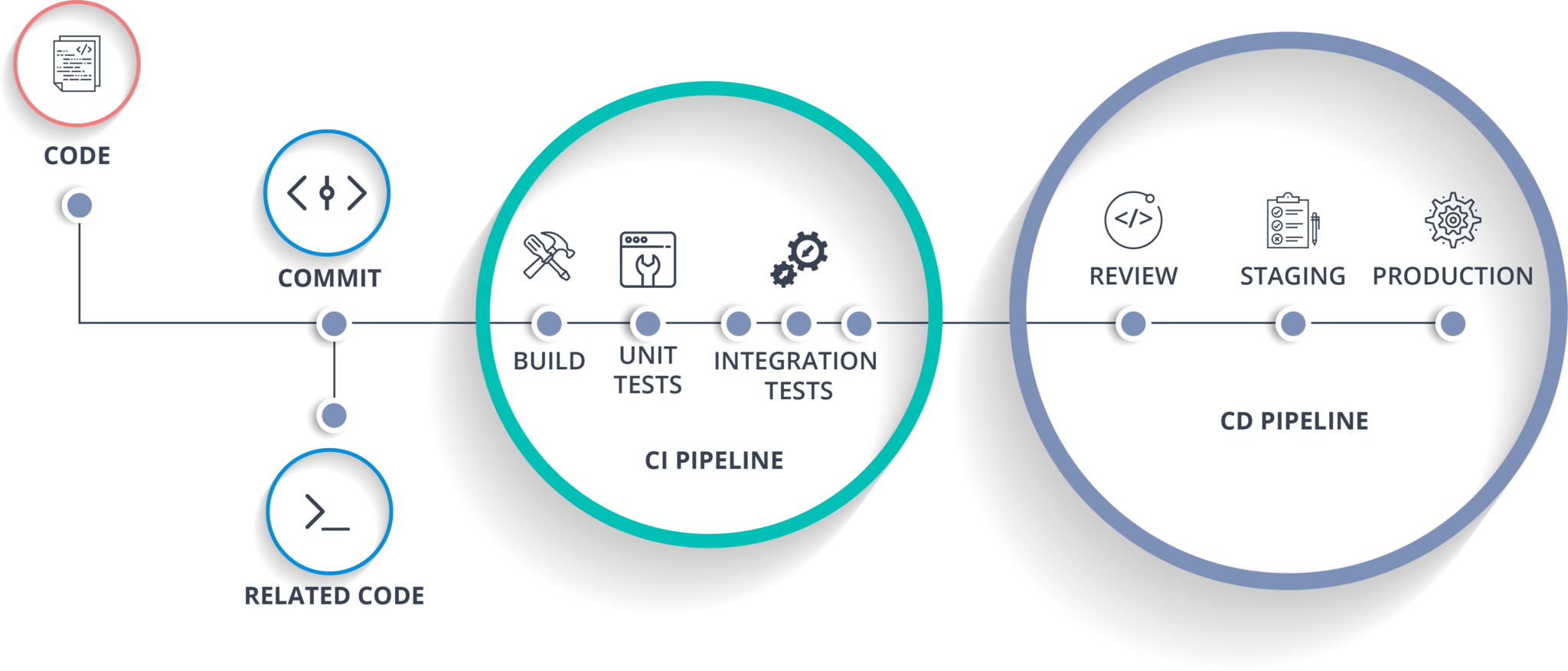
The world of software development has changed rapidly in the last decade, and as a result, companies today must deliver updates faster, resolve issues quickly, and maintain application stability at all times. Because of these demands, modern engineering teams heavily rely on CI/CD, one of the most important pillars of DevOps. Although it may sound complex at first, CI/CD becomes far easier to understand when broken down clearly. Therefore, this blog explains everything about CI/CD in simple terms, yet with deep technical clarity, so you can understand how it works and why it matters.
What Is CI/CD in DevOps?
CI/CD stands for Continuous Integration and Continuous Delivery/Deployment. While both concepts are closely connected, each plays a unique role in automating and accelerating the software development lifecycle. In simple terms, CI/CD helps teams build, test, and deliver software updates continuously instead of waiting for long release cycles. As a result, issues are detected earlier, features are delivered faster, and the overall software quality improves significantly.
Although CI/CD is a DevOps practice, it also supports agile development, cloud computing, microservices architecture, and modern application deployments. Moreover, because the process is highly automated, it minimizes human errors and ensures consistency.
Why CI/CD Matters in Today’s Engineering Teams
Before diving deeper into CI and CD, it is essential to understand why CI/CD is necessary. Previously, software development followed long cycles where developers wrote large chunks of code and merged them weeks or months later. However, this approach caused frequent conflicts, more bugs, and high deployment failures. Furthermore, teams struggled to deliver updates quickly.
With CI/CD, code is integrated, tested, and delivered continuously. As a result, problems are detected early, release cycles become shorter, and developers can focus more on innovation rather than repetitive manual tasks. Additionally, operations teams benefit from predictable deployments and fewer system failures.
Consequently, CI/CD has become a standard practice for startups, large enterprises, and global tech giants.
Understanding Continuous Integration (CI)
Continuous Integration is the process where developers frequently merge their code changes into a shared repository, often several times a day. As soon as code is pushed, an automated system triggers the build, executes tests, checks quality, and ensures that everything works as expected. Because this happens instantly, developers are notified of issues early before they become major problems.
Key characteristics of CI
- Developers integrate code frequently
- Builds and tests run automatically
- Issues are detected early
- Code quality is consistently checked
- Integration conflicts become minimal
CI workflow
To understand CI better, consider the following flow:
First, a developer writes code and pushes it to GitHub or GitLab. Immediately after that, the CI tool automatically pulls the code, runs a build, executes unit tests, and performs static code analysis. If the build fails, the developer fixes the issue. If it passes, the pipeline moves forward.
Common CI tools
- Jenkins
- GitHub Actions
- GitLab CI
- CircleCI
- Bitbucket Pipelines
Because CI ensures early validation, teams avoid expensive errors and maintain a stable codebase throughout development.
Understanding Continuous Delivery (CD)
Continuous Delivery is the next stage after Continuous Integration. Although CI ensures that the code is tested and validated, CD ensures that the application is always in a deployable state. However, in Continuous Delivery, the actual deployment to production still requires manual approval.
In other words, once the CI pipeline completes successfully, CD prepares the software for release. It automates packaging, artifact storage, versioning, environment preparation, and configuration management. As a result, the application can be deployed at any time with a single click.
Important characteristics of Continuous Delivery
- Applications remain production-ready at all times
- Deployment requires manual approval
- Release pipelines are automated
- Rollback processes are prepared
- Environments are consistent
Tools for Continuous Delivery
- Jenkins
- Argo CD
- Spinnaker
- GitHub Actions
- GitLab CD
Although Continuous Delivery reduces deployment friction, it still maintains human oversight for critical production releases.
Understanding Continuous Deployment (also CD)
Continuous Deployment is an advanced stage of automation where software is automatically deployed to production after it passes all tests. Unlike Continuous Delivery, no manual approval is required. Therefore, every code change that successfully passes the pipeline reaches production instantly.
Because of this, Continuous Deployment is used by companies that release updates many times a day, such as Netflix, Amazon, Google, and Facebook.
Characteristics of Continuous Deployment
- Fully automated deployment
- No manual approvals
- Very fast release cycles
- Immediate user feedback
- High level of reliability required
Tools for Continuous Deployment
- Argo CD
- FluxCD
- Jenkins X
- Spinnaker
Most organizations begin with Continuous Delivery and eventually move to Continuous Deployment once they build strong automation and testing practices.
Difference Between CI, Continuous Delivery, and Continuous Deployment
While CI, CD (Delivery), and CD (Deployment) may sound similar, they perform different functions. Understanding these differences is essential for building a complete DevOps pipeline.
Comparison Table
| Stage | Automated | Deployment Type | Purpose |
|---|---|---|---|
| Continuous Integration | Yes | No | Merge and test code frequently |
| Continuous Delivery | Yes | Manual production deployment | Keep the application production-ready |
| Continuous Deployment | Yes | Automatic production deployment | Release updates instantly without human approval |
Although the naming is similar, the level of automation increases from CI → CD (Delivery) → CD (Deployment).
How CI/CD Pipelines Work (Step-by-Step)
To understand CI/CD practically, it is helpful to look at how a pipeline operates from start to finish. Although pipelines may vary depending on tools and business needs, most follow these steps:
- Developer writes code
- Code is committed and pushed to Git
- CI tool detects the commit
- Automated build runs
- Unit tests are executed
- Static code analysis is performed
- Build artifacts are stored
- CD pipeline deploys to staging
- Integration and performance tests run
- Production deployment happens (manual or automatic)
- Monitoring tools track system behavior
- Feedback loops back to development
Because this entire process is automated, releases become faster, more consistent, and more reliable.
Benefits of CI/CD in DevOps
CI/CD offers a wide range of benefits that directly improve the speed and quality of software delivery. Moreover, these advantages extend to both development and operations teams.
Major benefits include:
- Faster and more reliable software releases
- Early detection of bugs and issues
- Reduction in manual effort
- Decreased deployment failures
- Higher development productivity
- Improved collaboration
- Faster incident recovery
- Better user satisfaction
- Higher release frequency
- Stable and predictable production systems
Furthermore, CI/CD promotes a culture of automation, experimentation, and continuous improvement, which aligns perfectly with DevOps principles.
Real-World Example of CI/CD in Action
Consider a team building a cloud-based e-commerce application. As developers work on new features, they continuously push updates to GitHub. Each time they commit, the CI pipeline automatically builds the application, runs tests, and verifies quality. Once the build succeeds, the CD system packages the application and deploys it into a staging environment. After final testing and approval, the updates are released to production. If the organization uses Continuous Deployment, the system pushes changes to production automatically without waiting for approval.
Because of this automated flow, the team delivers updates more frequently, reduces downtime, and maintains a high level of reliability.
Conclusion
CI/CD is one of the most crucial components of DevOps because it ensures that software is developed, tested, and delivered in a continuous, reliable, and automated manner. Although it may seem complex at first, CI/CD becomes powerful once you understand its purpose and workflow. With the right tools and practices, organizations can reduce risk, deliver updates faster, and significantly improve software quality. As a result, CI/CD has become a global standard for companies seeking efficient, scalable, and modern engineering workflows.
Next Steps :
- Follow our DevOps tutorials
- Explore more DevOps engineer career guides
- Subscribe to InsightClouds for weekly updates
- Devops tutorial :https://www.youtube.com/embed/6pdCcXEh-kw?si=c-aaCzvTeD2mH3Gv
Leave a Reply